The 8 most common causes and types of hair loss

The causes of hair loss
There are different types of hair loss, which can have different causes. But losing up to 100 hairs a day is still normal. Only when there are more is it referred to in medicine as pathological hair loss (effluvium). It should be treated before even more hair is lost. This is because hair loss caused by another disease, medication or stress is relatively easy to treat. As soon as the trigger can be treated, the hair loss usually subsides.
The general burden of losing hair is that missing hair is often equated with being old, lacking dynamism and energy. Our patients, especially when they are younger, find this unpleasant.
That's why we, the hair team at the Fontana Clinic in Mainz, would like to help you effectively combat your hair loss. Talk to us, we are there for you.
1. Hereditary hair loss (androgenetic alopecia)
This form of severe hair loss is the most common type of hair loss in men, but it also occurs in women, albeit much less frequently. The trigger is an overreaction of the hair roots to the hormone DHT, which is produced by the body, which causes the hair to fall out prematurely.
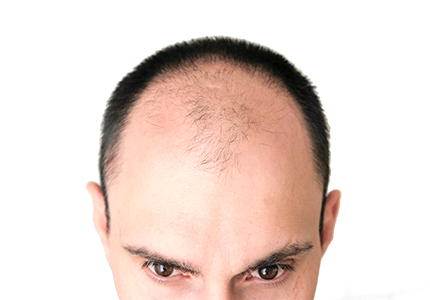
Hereditary hair loss follows typical patterns, in men starting at the temples and receding hairline (picture), in women at the crown. This form of hair loss can be treated, although not always. In this respect, a timely diagnosis is helpful.
You can find more information about genetic hair loss, how to recognize it and how you can have it treated at the end of this page on the following topics:
Causes of androgenetic hair loss
The cause of androgenetic hair loss is a hereditary hypersensitivity at the hair roots to the body's own hormone dihydrotestosterone (DHT). DHT impairs the function of the receptors on the hair roots responsible for the supply of nutrients. As a reaction, the nutrient supply to the hair root is restricted, so that the growth phases of the individual hair roots are shortened and the hair falls out earlier. If the sensitivity of these receptors is increased with a corresponding genetic predisposition to this hormone, the hair falls out relatively evenly on the forehead, receding hairline or, in women, on the crown of the head and upper head with a corresponding genetic predisposition.
You are probably asking yourself why not everyone is affected by androgenetic hair loss and why it progresses at different speeds. To understand this, it is important to know that the amount of hair roots is limited and each individual hair root only goes through a certain number of growth phases (12 to 14) during which hair is formed and during which it can grow. When the last of these stages is reached and completed, the hair root ceases its production forever. Therefore, a certain amount of hair loss in old age is completely normal, because at the end of each growth phase, the hair is no longer supplied and shed.
In androgenetic hair loss, the same effect occurs, triggered by the hormone DHT. By reducing the supply of nutrients, the growth phase is shortened and the hair falls out. However, depending on how long the growth phases, which vary by several years, have already been active and how many of them have already been passed, androgenetic hair loss has an effect on hair growth - individually very different, as does the genetic predisposition.
Hereditary hair loss can be treated with medication to a limited extent. For this purpose, the hormone preparations finasteride or minoxidil act on the receptors of the hair root to protect them from the hormonal influences of DHT and thus prolong the growth phases. A hair transplant, on the other hand, is less stressful and permanent.
Androgenetic hair loss in men
In order to determine androgenetic hair loss in men, medicine follows the Hamilton-Norwood scheme (graphic) developed in the 1970s.
It is used to classify and document the progression of hair loss. Typical is the course of receding hair on the temples and forehead that can be seen in stages I to III (pictures on the left of the middle and bottom rows to the middle).
Only later does the hair on the upper back of the head thin, as can be seen in stages IV to VI (pictures of the top row and middle heads of the middle row). In the last stage (VII), the surfaces on the entire skullcap merge into each other, resulting in a full baldness in which only the fringe of hair at the back of the head remains (last two pictures of the middle row).

If the course observed in oneself follows this pattern and begins with a receding of the hair on the forehead and receding hairline, which later continues at the upper back of the head, there is a high probability of androgenetic hair loss.
Androgenetic hair loss in women
In women, too, hypersensitivity to the male sex hormone dihydrotestosterone (DHT), which is also produced by the female body in small quantities, is the trigger for androgenetic hair loss. However, this does not occur as long as the female sex hormone estrogen, which is produced by women at the same time, is sufficient to neutralize hypersensitivity. Only when the production of estrogen decreases significantly, for example during menopause, during pregnancy or by taking or stopping the pill, can hypersensitivity occur, which leads to a gradual loss of hair, usually starting at the crown of the head.
Because androgenetic hair loss develops differently in women than in men, doctors use the Ludwig scale (Ludwig scheme), which is more suitable for this purpose. It describes the course of androgenetic hair loss in women using three stages.
In the first stage (No. 1 in the graphic) according to the Ludwig scale, the volume of hair in women decreases from the crown of the head. In the second stage (No. 2 in the graphic), a widening of the crown is already recognizable, which is increasingly difficult to conceal with a hairstyle. In the last stage (No. 3 in the graphic) of the Ludwig scale, not completely bare but clearly sparse areas appear on the front to middle top of the head, where the scalp can be seen.

In contrast to men, the process is much slower and does not end with total hair loss.
2. Circular hair loss (alopecia areata): causes and symptoms
Circular hair loss (alopecia areata) is a rather rare form of hair loss, in which smaller, coin-sized round bald patches appear on the head (more rarely also in the beard area or other parts of the body). Over time, the individual hairless areas can merge into each other and spread over the entire head.
In contrast to hereditary hair loss, the hair in circular hair loss does not fall out gradually, but characteristically very suddenly or in episodes.

The skin is characterized by an unusual ivory color. These bald patches are smooth, sunken, not scaly, and the hair follicles are preserved (picture).
At the edge of these bald spots, you can often find so-called bulb hairs, which are also called "exclamation mark hairs" because of their appearance. These are short-broken hairs that become thinner and thinner at the end.
Often there are also changes in the fingernails with dimples, grooves or sandpaper-like roughening.
Since the irregularly occurring bald patches of circular hair loss are clearly visible, it puts a heavy strain on the psyche and well-being of those affected. Many patients tell us that they subjectively lose their attractiveness and thus their self-confidence with every hair. The loss of hair – partially or completely – is difficult for many sufferers to cope with.
Many patients withdraw from their social environment and experience psychological suffering and even depression before they dare to seek professional treatment. Often these are younger people, because circular hair loss, which usually occurs before the age of 40, can also occur in childhood or adolescence.
The 3 forms of circular hair loss
Depending on the severity and course of the disease, a distinction is made between three different forms of circular hair loss:
- Alopecia circumscripta. With a share of 80%, it is the most common form of circular hair loss. Alopecia circumscripta is usually confined to the head, with the remaining facial hair on the eyelashes, beard and eyebrows being retained.
- Alopecia totalis. As the name suggests, this type of circular hair loss is characterized by the fact that those affected lose all of their scalp hair, including facial hair. This form occurs in about 10 to 20% of patients.
- Alopecia universalis. It marks the most severe course of the disease, in which the hair falls out all over the body. It occurs in less than 10% of cases.
Common diseases associated with circular hair loss
Circular hair loss rarely occurs alone, but usually together with other underlying diseases. The most common comorbidities include:
- Neurodermatitis
- Chronic inflammatory thyroid diseases (Hashimoto's thyroiditis)
- Edison's disease (adrenal insufficiency)
- Vitiligo (white spot disease)
- In addition, one in 10 people with Down syndrome will suffer from circular hair loss in the course of their lives.
Causes of circular hair loss
Even though research into the causes of circular hair loss has not been definitively completed, many studies show that an often genetically predisposed disorder of the body's own defense system is responsible for its development: immune cells attack hair follicles and these become inflamed.
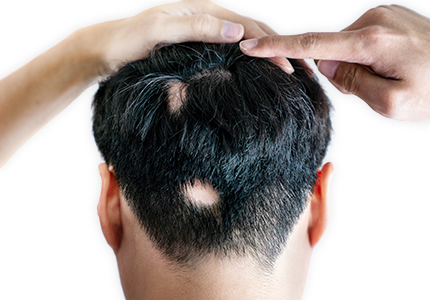
As a result, hair growth comes to a standstill and the hair falls out, but without scarring. This means that the hair follicles are preserved in principle, which is why there is a good prognosis for many sufferers. In about 80% of cases, the hair comes back after about a year and begins to grow again.
Nevertheless, it is necessary to put yourself in the hands of hair experts who will advise sufferers on the most appropriate products or therapies to treat the condition and promote healing. Many doctors usually resort to corticosteroids to reduce the inflammatory response.
In addition to autoimmune diseases, which have also led to alopecia in the family environment in about one fifth of patients, psychological reasons such as persistent stress or severe psychological shock are also discussed as the cause of alopecia areata.
3. Diffuse hair loss (alopecia diffusa): symptoms and hair loss causes
The hallmark of diffuse hair loss (alopecia diffusa) is an even thinning of the hair, which – unlike circular hair loss – is not limited to clearly defined areas on the head, but occurs diffusely over the entire head (image).
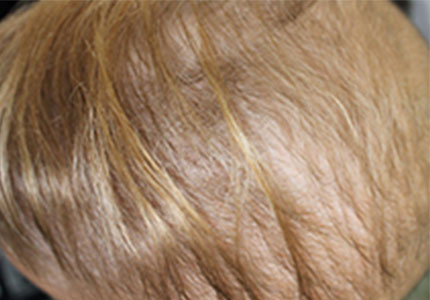
As a result, more and more scalp shimmers through the less hair. This affects both women and men.
Causes of diffuse hair loss
Several factors could be held responsible for diffuse hair loss. You can control some of these triggers yourself and determine whether hair growth will resume if you have reduced the cause, such as stress, or eliminated malnutrition. For others, it is advisable to go to a doctor, who can determine and treat an iron or zinc deficiency based on blood values, for example.
The most common causes of this are:
- Endocrine gland disorders: hyperthyroidism or hypothyroidism
- Medicines, e.g. anticoagulants, chemotherapeutic drugs, psychotropic drugs, contraceptives (pill)
- Vitamin A in too high a dosage or lithium carbonate
- General malnutrition and diets
- Iron and zinc deficiency
- Psychological stress as a trigger or amplifier
- Harmful substances: alcohol, nicotine, drugs
Rare triggers include:
- Chronic infections
- Chronic autoimmune diseases
- Heavy metal poisoning
- Autoimmune diseases such as lupus erythematosus
Overall, diffuse hair loss is good, although not treatable in all cases. The earlier you start the therapy, the less hair is lost and the better and faster hair growth can be stimulated again.
4. Scarring hair loss (alopecia cicatricalis): symptoms and causes
Scarring alopecia is rare and relatively difficult for laypeople to clearly recognize. This is usually a slowly progressing hair loss that leads to asymmetrical bald patches on the head. In addition to hair loss, there is inflammation and increased scarring on the affected skin areas. This is associated with other symptoms that can be recognized relatively well.
Common symptoms include:
- Redness of the scalp
- Itching of the scalp
- Burning sensation on the scalp
- Pain on the scalp
- Formation of pustules and blisters
- Scaly skin on the bald areas
Despite these accompanying symptoms, it is not easy even for doctors to diagnose scarring hair loss. To be on the safe side, a small sample of the scalp must often be taken (biopsy) and sent to a specialist laboratory for examination.
Because hair can no longer grow in the areas that have already been scarred, a doctor should be consulted for clarification and treatment if scarring alopecia is suspected. The goal is to treat the cause of the condition while slowing down scarring to avoid destroying more hair follicles.
A distinction is made between three types of scarring hair loss:
- Primary scarring alopecia
Primary scarring alopecia is triggered by disorders that occur during the development of the hair follicles or that are caused by hereditary changes. - Acquired primary scarring alopecia Acquired primary scarring alopecia
, which only develops over time, is when the body's autoimmune reaction to its own hair follicles and certain skin diseases of unknown origin, which occur together with scarring alopecia, trigger hair loss. - Secondary scarring alopecia
In secondary scarring alopecia, the hair follicle is not the actual target of the inflammatory process. Rather, the follicle is destroyed indirectly as a side effect of an infection, a tumor or by external factors such as radiation, burns or injury.
Causes of scarring hair loss
Scarring alopecia usually occurs for no apparent reason and in men and women alike. However, it is often a side effect of other diseases or inflammations of the scalp, which must first be detected and treated in order to treat hair loss.
In this case, you should seek medical care as soon as possible, because this form of alopecia irretrievably destroys the hair follicles. The scarred areas remain permanently bald and can only be covered with hair again by a hair transplant.
There are various causes that can result in scarring hair loss. This includes, among other things, a variety of different diseases such as:
- Diseases that affect individual organs or the entire body, such as the autoimmune disease lupus erythematosus or tumor diseases
- Skin diseases such as the inflammatory skin disease scleroderma
- Diseases of the scalp such as psoriasis, viral, bacterial or fungal infections
- Exogenous factors that act from the outside, such as chemical burns, burns, medical radiation therapies to treat tumors, or radioactive radiation sickness, which are another form of exogenous factors
The earlier the disease and its cause are detected, the higher the chances of getting it under control through appropriate treatment. Scarring alopecia can often be combated with anti-inflammatory drugs, corticosteroids or antibiotics. This can prevent the affected harmful cells from destroying further hair follicles. This is important because the scarred follicles can no longer regenerate and no longer produce hair.
After treating the cause and stopping the hair loss, a medical hair transplant can be useful to cover the corresponding bald spots. There are usually no other options, because unlike other types of hair loss, treatment with commercially available remedies that stimulate hair growth is completely ineffective for scarring alopecia because the follicles are destroyed.
5. Other important types of hair loss
In addition to the more common types of hair loss, there are a number of rare types of hair loss. Many of them are mixed forms of the above-mentioned basic hair loss diseases.
Alopecia actinica
Radiation-induced alopecia (alopecia actinica) is caused by exposure to radioactive or ionizing radiation. It is observed in people with radiation sickness, as they can occur in nuclear contamination or in medically induced radiation therapies to combat tumor diseases.
Alopecia mecanis (alopecia traumatica)
Alopecia mecanis as well as alopecia traumatica are caused by permanent pressure, tension or constant friction at the hair root. For example, by carrying heavy loads on the head or resting on the head for long periods of time in the case of bedridden people and infants. Braided hairstyles or braids that are too tightly tied, usually with a cultural background, or the proverbial "hair pulling", i.e. pulling the hair in stressful situations, can also lead to this hair loss.
The so-called trichotillomania, which has psychological causes (means the nervous pulling out of hair due to psychiatric illnesses), is also part of this form of hair loss.
Alopecia seborrhoica
In alopecia seborrhoica, an overproduction of sebum (seborrhea) at the hair roots triggers chronic inflammation of the hair follicle, which leads to hair loss.
6. Hair loss in men
If your grandfather had only a few hairs left and you are currently losing more than 100 hairs a day, this most likely indicates the hereditary form of hair loss, androgenetic alopecia. This is because it is the most common cause of hair loss in men (studies cite up to 80%).
This genetic hair loss often begins between the ages of 20 and 30 in the area of the temples (picture) and the upper region of the back of the head. For some faster, for others rather gradually. The younger you are, the more inappropriate and stressful the light head is perceived. After all, not everyone is comfortable with a fashionable bald head, which many use as a practical way out.

In any case, over the years, the restricted hair growth initially leads to the formation of the typical receding hairline (picture). With increasing age, this hair loss becomes more and more widespread.
The hair now also thins at the back of the head (tonsure). In the late stages, the two large hair-free zones then connect with each other, creating a large-scale baldness. Eventually, the hair only grows in a horseshoe shape as a wreath of hair. But this hair ring remains, and that's the good news because its hair follicles have a different structure and are thus immune to the hormonal change.
Hereditary hair loss can only be treated with hormones. If you don't want to do this or if you can't tolerate the side effects, you can have your robust hair transplanted from the fringe of hair at the back of the head to the bald areas, where it will continue to grow permanently. But to do this, you should first have the cause clarified by a doctor.
The course of hereditary hair loss in men is classified using the Norwood-Hamilton scale (picture above). This scale helps doctors classify the stage based on the seven stages to better determine androgenetic hair loss.
This type of hair loss is mainly passed on through the mother's genes. So if the maternal grandfather still had thick hair in old age, the chances are good that you will be able to keep your own hair for a long time as a man.
7. Hair loss in women
Lost hair: For almost every woman, the shock is great when she notices that she is losing more hair. If there is more and more hair on the pillow, in the shower or after styling in the brush, there is usually little doubt that something is wrong with the hair growth.
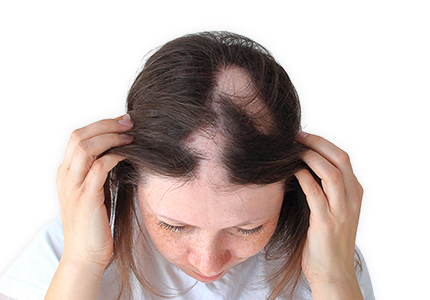
If you then have a small tuft in your hand when you grab your hair vigorously, horror images quickly play out in your mind's eye. Now you should make an appointment with your family doctor or dermatologist to clarify the cause in order to do something specifically about the thinning hair. Because in many cases, therapy can help and at least slow down or end hair loss.
Medical clarification is especially important for women. Although androgenic hair loss is also the second most common cause of hair loss in women at about 30%, 70% of women are responsible for other triggers that are responsible for hair loss.
Common causes of hair loss in women
Below is an overview of the specific causes of hair loss in women:
➤ Hormonal fluctuations due to pregnancy or birth control pills as well as menopause
The contraceptive pill prevents unwanted pregnancy by supplying the female body with the hormones estrogen and progestin to prevent pregnancy. The effect of the two hormones on the hair is in opposite directions, because estrogens can even make the hair look stronger, shinier and generally healthier at first. But depending on the cycle, the pill also supplies the body with progestins. These synthetic progestins have a similar effect to the male sex hormone dihydrotestosterone (DHT), which is also responsible for hair loss in men. The same mechanism, but far less common than in men, can also be set in motion in women when their hair follicles react hypersensitively to rising progestin levels. One effect of this reaction can be increased hair loss.
But even when stopping the pill, there can be temporarily increased hair loss. This is because it also lowers the estrogen level, and the positive side effect with which the hormone protected the hair follicle at the beginning is absent. In addition, there can be an increased intolerance of the hair follicles to the hormone progestin. Although the body usually regulates this difference on its own, which can take several cycles, in some cases the self-regulation of the hair follicles fails. Hair growth then stops even after stopping the pill.
➤ Hair loss in women during pregnancy
The exact mechanism has not been conclusively clarified. The cause of hair loss can be the increased need for nutrients caused by the embryo as it grows. Since nature has arranged it in such a way that the fetus is cared for first, a nutrient deficiency can occur in the mother, which results in hair loss. Whether there is a nutrient deficiency can be clarified by means of a blood test. Often it is an iron deficiency that develops quickly because a pregnant woman has an increased iron requirement of about 60%. If this iron deficiency is not covered, the loss of hair can be a consequence in addition to increased fatigue, pale skin and restlessness.
➤ Hair loss in women during or after pregnancy
During pregnancy, the female body changes to care for and protect the fetus. In addition, the hormone estrogen is also increasingly produced. In addition to many other positive effects, hair growth is also strengthened. Most women have thicker, healthier and stronger hair during pregnancy. But not all. In some women, hair falls out during or for some time after pregnancy.
➤ Hair loss in women after pregnancy
Especially in the period after pregnancy, hair loss is not uncommon. The reason for this is that the body has to adjust to the hormonal balance that changes again after childbirth, which produces less estrogen. Estrogen supports hair growth. Accordingly, many women react with hair loss after pregnancy to the reduced production of estrogen. Under normal circumstances, this postpartum effluvium (hair loss after pregnancy) should be neutralized after a few months, unless there is increased stress, malnutrition or psychological stress.
➤ Hair loss in menopausal and postmenopausal women
Similar to the first time in puberty, a woman's entire hormonal balance is turned upside down during menopause. This strong hormonal change is not only the reason for unusual sweating, sleep disorders and mood swings, but can also be the trigger for hair loss. This form of hair loss is called telogen effluvium, which is said to be already anchored in the genetic make-up. The cause of hair loss here is also that the hair roots of the affected women react to the falling estrogen level and the resulting stronger dihydrotestosterone level, and as a result hair growth is weakened.
8. Other causes that can trigger hair loss
Normal, healthy hair growth requires that the hair roots are supplied with sufficient nutrients. If this supply is disrupted, they can fail. Therefore, a whole range of other diseases or disorders in the body can also be the trigger for hair loss. These indirect connections are sometimes difficult to recognize and require experience. Below, we've listed some of the most common of these triggers to give you a sense of what factors and any known conditions to look out for when you're losing more hair than usual.
▹ Medication as a trigger
Certain medications can also cause hair to fall out as a side effect: This is generally known from chemotherapy, but other immunosuppressors (tamoxifen, methotrexate) can also cause significant hair loss. Lesser-known but possible culprits are also some antibiotics such as nitrofurantoin and erythromycin, allopurinol, fibrates and statins, ACE inhibitors, beta-blockers, phenprocoumon, heparins and methylphenidate. To find out, it is important to inform the examining doctor about the intake of medication. As a rule, the hair grows back after stopping the drug. Nevertheless, antibiotics should not be discontinued before the end of therapy, otherwise the resistance of the bacteria increases and the drugs can lose their effectiveness. If a medication is the cause of hair loss, an alternative should be discussed with the prescribing doctor. In the case of drug-induced hair loss, or if the cause cannot be determined, PRP therapy with prepared autologous blood can help to supply the hair with sufficient nutrients and counteract the side effect of the drug.
▹ Hair loss due to nutrient deficiency
For healthy hair growth with the longest possible growth phases, the hair needs some nutrients. These nutrients are usually included in a balanced diet. However, nutrient deficiencies can occur due to an unbalanced diet and diets, but also after surgical interventions on the stomach and intestines, illnesses, pregnancy or drug addiction. This deficiency can be the cause of hair loss, because the body needs a whole lot of different vitamins, minerals and micronutrients for hair growth. These include:
- Zinc
- Iron
- Copper
- Selenium
- Vitamin A
- Vitamin e
- Vitamin D
- Vitamin B12
- Vitamin B5
- Biotin
- Essential fatty acids, such as those found in linseed oil
- Essential amino acids (proteins)
A nutrient deficiency can be determined by a blood test and compensated for by a special PRP therapy for hair growth, for example. In this treatment, the nutrients are not absorbed through food, but injected directly into the hair root. For this purpose, the natural stem cells obtained from the patient's own blood plasma are enriched with the appropriate nutrients and introduced into the scalp via small injections. In this way, the hair follicles, which are important for hair growth, are fully supplied with nutrients.
▹ Hair loss as a side effect of an eating disorder
Eating disorders such as anorexia nervosa are primarily mental disorders that are expressed in unhealthy eating behavior. The affected people eat less food than would be necessary to maintain their vital functions. In an effort to avoid carbohydrates and calories, the diet becomes more and more one-sided, leading to extreme forms of nutrient deficiencies. The body distributes the few nutrients left to it to more important places. Hair growth is weakened. At first, the hair becomes thinner and duller, later it begins to fall out.
Sometimes anorexia sufferers only realize their poor physical condition when their hair falls out. At this point at the latest, it is high time to consult a specialist. The treatment of eating disorders does not belong in the hands of hair experts, but in the hands of family doctors and psychological psychotherapists.
▹ Thyroid gland as a trigger for hair lossI
Many hormones important for metabolism are produced in the thyroid gland, which are released into the blood from there. Therefore, an overactive or underactive thyroid gland can also be the cause of hair loss. This type of hair loss can lead to hair loss in women, less often in men. Malfunctions of the thyroid gland can be detected on the basis of several characteristics and detected by a special blood count. If you suffer from the symptoms mentioned below, apart from increased hair loss, talk to our team of experts or your family doctor to have your thyroid examined. In some cases, additional endocrinological hormone expertise may also be necessary to diagnose an underlying thyroid disease.
Hair loss in thyroidglands underfunction
In the case of an underactive thyroid (hypothyroidism), only reduced amounts of the hormones triiodothyronine and tetraiodothyronine are produced. An undersupply of these hormones slows down the overall metabolic turnover, which also has a detrimental effect on hair growth.
Typical symptoms of hypothyroidism can be:
- Brittle and dull hair
- Weight gain
- Fatigue
- Slowed reflexes
Hair loss in anoveractivethyroid
In the case of an overactive thyroid (hyperthyroidism), the body produces more thyroid hormones than it needs. The metabolic rate increases, the weight decreases. But in the process, the body no longer uses the nutrients adequately, which can also lead to hair loss, among other things: The hair grows faster (too fast) from its roots, so it becomes thinner, which means that it can break off faster. Regardless of hair loss, the typical symptoms of hyperthyroidism are:
- Palpitations, palpitations
- Insomnia
- Restlessness and nervousness
- Increased sweating
▹ Stress as a cause of hair loss
Although research is not yet fully aware of the mechanism involved, it is clear that persistent negative stress can be a cause of hair loss. It is suspected that the messenger substances produced by stress lead to a number of inflammatory processes on the hair follicle. The hair can thus be damaged in its structure and prevented from growing. In order to recognize stress or psychological stress as a trigger for hair loss, it helps if the patients themselves deal with the question of whether they have been exposed to increased stress since they noticed their hair loss. If this is the case, hair loss can be stopped in most cases as soon as the stress subsides. After the stressful phase has been overcome or dampened by relaxing measures, normal healthy hair growth should resume
▹ Hair loss due to incorrect care
Washing, grooming, styling, blow-drying, straightening, dyeing, wrapping or permanent pulling through extensions (traction alopecia): Perfectly styled hair is expected to put a lot of strain on, often on a daily basis. Therefore, it is not surprising that the individual and fine hairs cannot withstand this stress in the long run, become thinner and thinner or even fall out. Experts therefore speak of a "burn-out of the hair". Often well-intentioned, however, certain hair shampoos, styling, care and dyeing products can strain the hair and clog its pores. The result: the hair can no longer breathe and is insufficiently supplied with nutrients. Dyes and tints usually only work with numerous chemical ingredients. They make the hair brittle and dull and can ultimately lead to hair loss. But also the daily hot air from the hair dryer or straightener and even the often dry heating air in the winter months deprive the hair of the necessary moisture. As a result, it is sometimes attacked so strongly that it becomes brittle and falls out before healthy hair can grow back. To avoid hair loss due to incorrect or excessive care, you should avoid excessive washing and use pH-neutral shampoos. Other care and styling products should also not be used too often. In addition, you should avoid heat from blow-drying and smoothing as often as possible or not set the highest levels of the devices.
▹ Hair loss due to hairstyles and extensions
Permanent pull on the hair roots can also lead to hair loss. It is caused by hairstyles that are permanently tied too tightly, ponytails that are tied too tightly, but also by curlers or hair extensions. These measures can cause too much mechanical tension on the hair roots. This process (traction alopecia), which can also occur on eyelashes due to eyelash extensions, permanently damages the hair and in many cases is irreversible, i.e. not reversible.
▹ Hair loss due to Corona
Since the outbreak of the Corona pandemic, more and more patients have noticed unexplained, usually diffuse hair loss following their Covid infection. In the meantime, reliable data is available that patients suffering from Corona can lose hair. Most of the time, however, the hair does not fall out until people have recovered. This is shown by a study by the University of Tübingen (Deutsches Ärzteblatt), according to which hair loss often only becomes apparent after the twelfth week. The intensity of this hair loss is probably related to the severity of the Covid infection. It occurs much more frequently in hospitalized patients than in people who have been able to cure their illness at home. The cause of this hair loss is likely to be an undersupply of the hair root. It is triggered by the fever of a corona infection to provide the rest of the body with more energy to fight the virus. Because this undersupply is only critical in a certain growth phase, it only affects a relatively small part of the hair, which enters a resting phase prematurely and falls out three to four months later. The rest of the hair is not affected. Therefore, and this is the good news, this type of hair loss is usually temporary. However, it has not yet been conclusively researched whether the hair roots affected by the infection recover completely.
Your personal advice
As a specialist clinic for hair transplantation, we have a lot of experience in inserting permanently growing hair into bald and sparse areas. Success always requires knowing the cause of hair loss. We will be happy to advise you to identify the cause of your hair loss. However, we cannot carry out all the examinations ourselves. Therefore, we recommend that our patients first get a diagnosis from their family doctor or dermatologist that determines the cause of their hair loss. Based on this diagnosis, we can decide with you whether a hair transplant is the right way for you to regain beautiful and full hair.
If you would like us to help you, just give us a call or quickly fill out the short contact form. We look forward to seeing you.